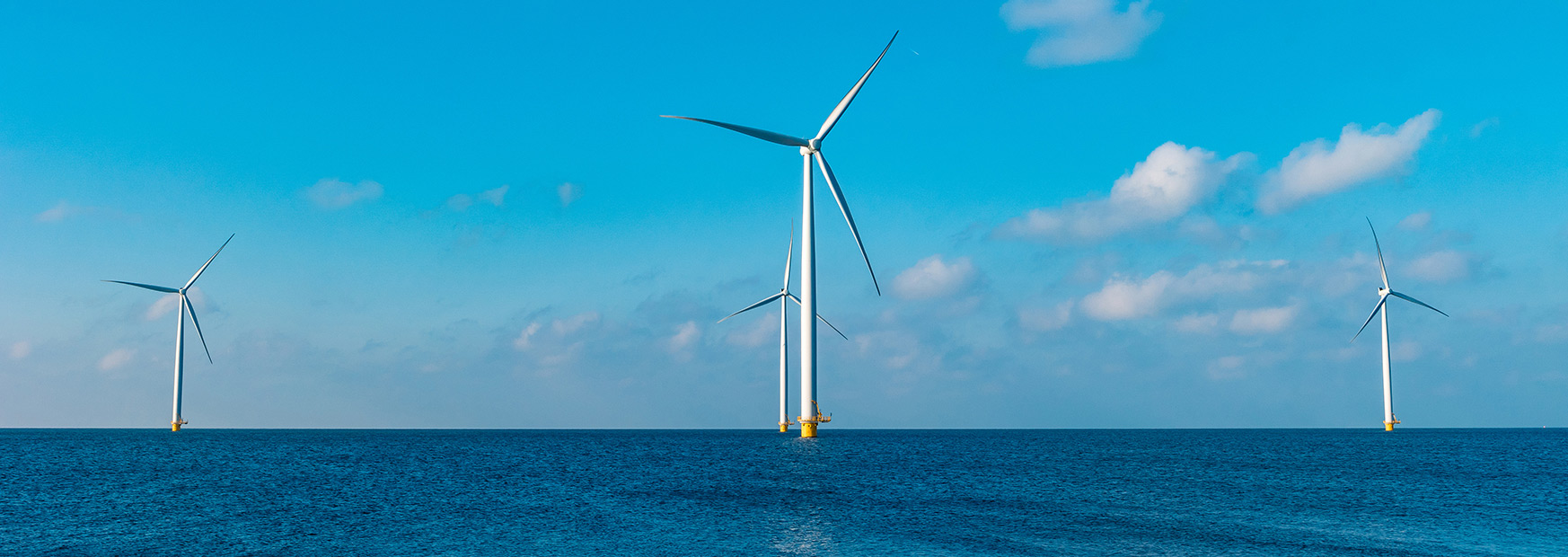
OFFSHORE WIND ENERGY IN GERMANY – RECENT DEVELOPMENTS UNDER THE OFFSHORE WIND ENERGY ACT
While earlier reforms of the WindSeeG primarily focused on the design of tender procedures and the allocation of offshore areas, the more recent amendments since 2022 have fundamentally changed the political and legal character of the Act. The current framework no longer merely aims to organise offshore tenders efficiently; instead, the Act has become a strategic instrument for ensuring energy security, accelerating decarbonisation and implementing European climate policy objectives.
In particular, Germany has significantly increased its offshore expansion targets, accelerated planning and approval procedures and strengthened the legal priority of renewable energy projects. At the same time, the rapid expansion of offshore wind energy continues to raise complex questions concerning competition law, environmental protection, maritime spatial planning and grid infrastructure.
The Development of the Tender Regime
One of the most controversial aspects of the WindSeeG in recent years concerned the tendering system for offshore wind farms.
Under the original model, offshore projects were generally awarded to the bidder requiring the lowest level of state support per kilowatt hour. Initially, this mechanism was intended to promote competition and reduce the costs associated with renewable energy subsidies. Over time, however, the economic attractiveness of offshore wind energy increased considerably due to technological advances, economies of scale and declining production costs.
As a consequence, bidders increasingly submitted so-called “zero-cent bids”, meaning that they waived any claim to state funding altogether. While this development was politically welcomed as evidence of the sector’s growing competitiveness, it also created significant practical problems. In several tender procedures, multiple bidders submitted identical zero-cent bids, making it impossible to determine a winner solely on the basis of price.
This development triggered an extensive political and legal debate. Some stakeholders advocated the introduction of negative bids, under which companies would effectively pay the state for the right to develop offshore areas. Others proposed introducing a second bid component based on qualitative criteria such as environmental sustainability, implementation speed or technical reliability.
However, many industry participants criticised these proposals. In particular, they argued that complex bid structures and uncertain financial burdens could discourage investment and reduce the number of participants in future tenders.
Against this background, the 2020 reform of the WindSeeG introduced a lottery mechanism for cases involving several identical bids. Rather than evaluating secondary criteria or permitting negative bids, the legislator opted for a comparatively simple and administratively efficient solution. At the time, this mechanism was widely regarded as a temporary compromise.
From Subsidy System to Commercial Offshore Market
Since 2022, however, the practical and economic environment of offshore wind energy in Germany has changed substantially.
The sector has evolved from a heavily subsidised infrastructure market into a highly competitive commercial investment environment. This became particularly apparent during the offshore auctions conducted in 2023. For the first time, bidders were willing to pay extraordinarily high amounts for the right to develop offshore wind areas. The auction revenues reached approximately EUR 12.6 billion for several gigawatts of planned capacity.
These developments demonstrated not only the enormous economic potential of offshore wind projects but also the increasing strategic importance of suitable offshore areas. At the same time, however, the auction results also triggered criticism. Several market participants warned that excessively high bid payments could ultimately increase financing risks, electricity prices and pressure on supply chains.
As a result, the political discussion has shifted considerably. Whereas earlier reforms mainly focused on avoiding distortions caused by zero-cent bids, current debates increasingly concern investment certainty, grid availability, implementation speed and industrial policy considerations.
The previously central question of whether lottery procedures should remain in place has therefore lost some of its practical significance, even though the mechanism formally continues to exist under certain circumstances.
New Expansion Targets under the WindSeeG
The most important substantive reform of recent years concerns Germany’s offshore expansion targets.
In response to the European Green Deal, the energy crisis following Russia’s invasion of Ukraine and Germany’s accelerated phase-out of fossil fuels and nuclear energy, the legislator significantly increased the statutory targets contained in section 1 WindSeeG.
The Act now provides that offshore wind capacity shall reach:
at least 30 gigawatts by 2030,
at least 40 gigawatts by 2035, and
at least 70 gigawatts by 2045.
These figures represent a substantial increase compared to the previous legal framework and illustrate the central role assigned to offshore wind energy within Germany’s future electricity system.
The revised targets are closely connected to broader European policy objectives. The European Union intends to achieve climate neutrality by 2050 and regards offshore renewable energy as one of the key technologies necessary for this transition. Germany therefore increasingly coordinates its offshore planning with European infrastructure strategies, particularly concerning cross-border interconnectors and integrated offshore grids.
Offshore Wind Energy as an „Overriding Public Interest“
Another highly significant legal innovation introduced by the recent amendments is the explicit recognition that offshore wind energy projects and their associated grid connection infrastructure serve the “overriding public interest” and public safety.
This provision considerably strengthens the legal position of offshore projects in administrative approval procedures and judicial balancing decisions. In practice, the designation may facilitate the approval of projects even where competing interests – particularly environmental concerns – are affected.
The concept of “overriding public interest” has become one of the central instruments of German renewable energy legislation in recent years. Comparable provisions can also be found in onshore wind and electricity grid legislation.
From a practical perspective, the provision is intended to accelerate project implementation and reduce legal uncertainty. Nevertheless, environmental organisations continue to criticise the risk that ecological concerns may receive insufficient consideration under accelerated procedures.
Acceleration of Planning and Approval Procedures
Since 2022, the legislator has increasingly prioritised procedural acceleration measures.
One of the key objectives of the reforms is to shorten the often lengthy planning and approval processes that previously delayed offshore expansion. The amendments therefore introduced various mechanisms intended to simplify administrative procedures and improve coordination between offshore generation projects and transmission infrastructure.
A central role is played by the “Flächenentwicklungsplan” (Site Development Plan), prepared by the Federal Maritime and Hydrographic Agency (“Bundesamt für Seeschifffahrt und Hydrographie” – BSH). The plan determines which offshore areas are to be developed, when projects are to be commissioned and how grid connection systems are to be coordinated.
The continuous updating of the Site Development Plan has become increasingly important due to the expanded capacity targets. In addition, Germany seeks to improve synchronisation between offshore wind farm construction and the expansion of offshore transmission systems in order to avoid delays caused by missing grid infrastructure.
Recent legislative amendments were also heavily influenced by European Union law, particularly the revised Renewable Energy Directive (“RED III”). The Directive requires Member States to accelerate permitting procedures for renewable energy projects and to reduce administrative obstacles. German lawmakers have therefore adapted the WindSeeG and related legislation accordingly.
Environmental Concerns and Maritime Spatial Planning
Despite broad political support for offshore wind expansion, environmental concerns remain highly significant.
Environmental organisations have repeatedly criticised the large-scale industrialisation of marine areas and warn of adverse effects on biodiversity, bird migration routes, underwater ecosystems and marine mammals. Concerns also exist regarding the cumulative impact of submarine cable systems and construction activities on sensitive habitats in the North Sea and Baltic Sea.
The conflict between rapid renewable expansion and marine environmental protection has therefore become one of the defining tensions of the current offshore regime.
In response, legislators and authorities increasingly emphasise the need for integrated maritime spatial planning and environmentally compatible project design. Environmental assessments continue to play an important role within planning procedures, even though recent reforms aim to streamline and accelerate these processes.
At the same time, policymakers argue that climate protection itself constitutes an essential element of environmental protection and that delaying renewable energy projects may ultimately create even greater environmental risks.
The Continuing Debate on Market Design
The discussion surrounding the most appropriate support and auction model for offshore wind projects also continues.
In particular, many stakeholders still advocate the introduction of “Contracts for Difference” (“CfD”) similar to systems already used in other European jurisdictions, including the United Kingdom. Under such models, operators receive compensation if electricity market prices fall below a predefined level while being required to refund excess profits if market prices exceed that level.
Proponents argue that CfD mechanisms could reduce financing costs, increase investment certainty and stabilise electricity prices. Critics, however, warn that such systems may distort market incentives and cannot eliminate all commercial risks.
Germany has so far refrained from implementing a comprehensive CfD model for offshore wind energy. Nevertheless, the debate remains politically relevant and may influence future reforms of the WindSeeG.
Constitutional Law Aspects
It is also worth noting a decision of the German Federal Constitutional Court rendered in June 2021. According to this decision, the Offshore Wind Energy Act had a partially unjustified retroactive effect for companies that already carried out examinations and planning in the Exclusive Economic Zone at their own expense on the basis of the previous legal situation. The new Act made these obsolete and declared them to be terminated even though the companies concerned had already invested several million euros. According to the German Federal Constitutional Court, the legislator was required to provide adequate compensation to these companies. The Act as such was not null and void, however, the relevant area had to be redrafted. The decision highlighted the constitutional limits applicable to far-reaching restructuring of regulatory frameworks in highly capital-intensive sectors.
Outlook
The Offshore Wind Energy Act has evolved far beyond its original function as a technical tendering framework. Today, it constitutes one of the core instruments of Germany’s climate, industrial and energy security policy.
The legal focus has shifted noticeably over recent years. Earlier debates centred on subsidy mechanisms, zero-cent bids and lottery procedures. Current discussions instead concern implementation capacity, grid integration, acceleration of administrative procedures, supply chain resilience and coordination with European infrastructure strategies.
Given Germany’s ambitious target of 70 gigawatts by 2045, further legislative reforms are highly likely. Future amendments may address additional acceleration measures, cross-border offshore infrastructure, hydrogen integration, electricity market reform and more sophisticated auction models.
At the same time, the tension between rapid decarbonisation and environmental protection is expected to remain one of the defining legal and political challenges of offshore wind development in Germany for years to come.
Key Contacts

Dr Eckehard Volz
LL.M. (Stellenbosch)

Anna-Sophie Waldmann